
A Comprehensive Look at Death Statistics in Dubai

Key Insights
- In 2019, only about 1.5 out of every 1,000 people died in the UAE, which is much lower than the global average of 7.7 deaths per 1,000 people in 2022.
- In 2022, most deaths in Dubai were due to heart disease, making up 41% of all deaths.
- In 2022, more men died than women, with 68 deaths per 1,000 men, compared to 46 deaths per 1,000 women. Men tend to have more accidents and work in riskier jobs.
- Older people have a higher chance of dying. In 2021, people aged 75 and older had the most deaths.
- In 2022, 4,016 people died in Dubai. Most of them were expatriates (3,345), not Emiratis (671), because many people from other countries live and work in Dubai.
- In 2022, 4 out of every 1,000 babies died before turning one. For mothers, about 9 out of every 100,000 women died during childbirth in 2020. These numbers are improving because of better healthcare.
- In 2023, Dubai saw fewer road deaths than ever before, with just 1.6 deaths per 100,000 people. Many of these deaths were caused by young drivers aged 19 to 29.
- Diseases like heart disease, cancer, diabetes, and lung disease cause 77% of deaths in the UAE. To fight this, Dubai has a fitness challenge where people are encouraged to exercise for 30 minutes every day for 30 days. In 2024, over 2.7 million people joined.
- The hot weather in Dubai, with temperatures sometimes over 50°C, can make outdoor work dangerous. Air pollution is also a problem, leading to about 7% of all deaths in the country.
Overview of Death Statistics in Dubai
Understanding death statistics in Dubai is important for improving healthcare and living conditions. Mortality data helps find common health problems, use resources wisely, and create better health programs for the community.
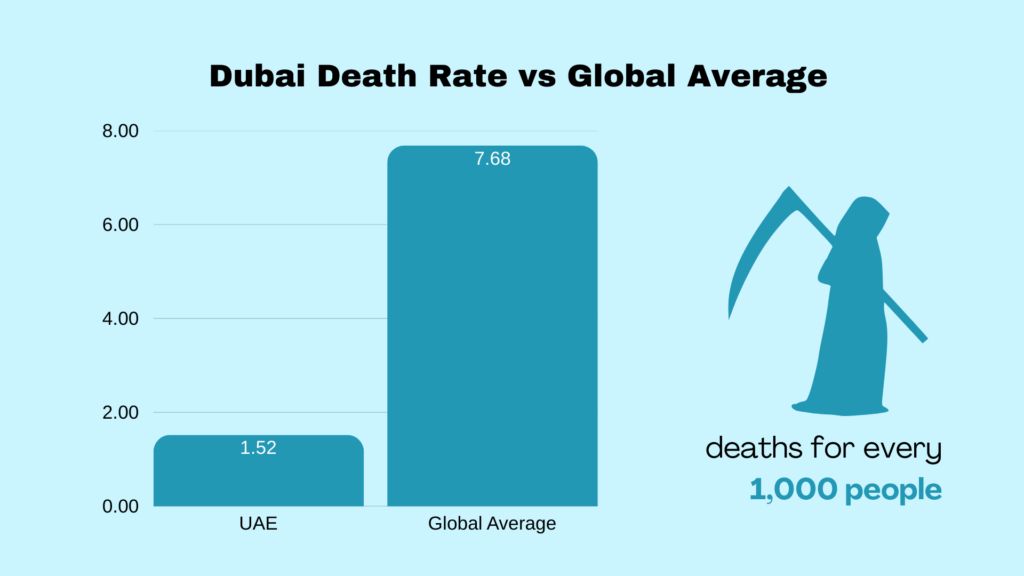
Dubai has a low death rate compared to the global average. In 2019, there were about 1.52 deaths for every 1,000 people in the United Arab Emirates (UAE), which includes Dubai. This is much lower than the global average of 7.68 deaths per 1,000 people in 2022.
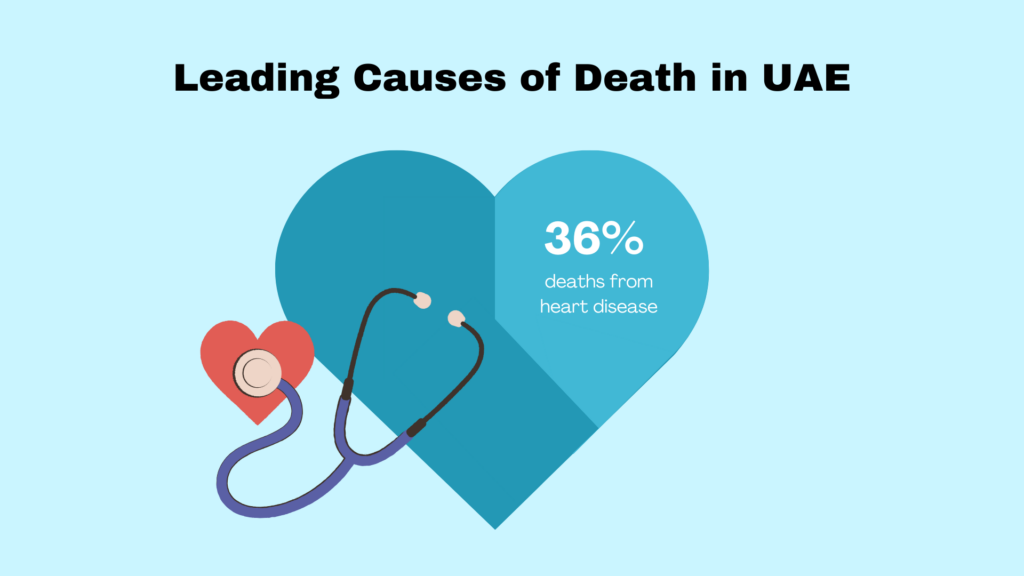
The leading cause of death in the UAE is heart disease, accounting for 36% of all deaths in 2019. Other significant causes include injuries and cancers.
Overall, Dubai has a low death rate, which shows that healthcare and living conditions are of good quality. The UAE has invested in modern medical facilities and advanced technology, leading to better patient care.
Moreover, a large part of the Emirate’s population consists of young expatriate workers. Since there are fewer elderly people, the overall death rate remains low.
Key Mortality Statistics in Dubai
In 2022, the UAE reported 1.86 deaths for every 1,000 people, and this number has remained stable in recent years.
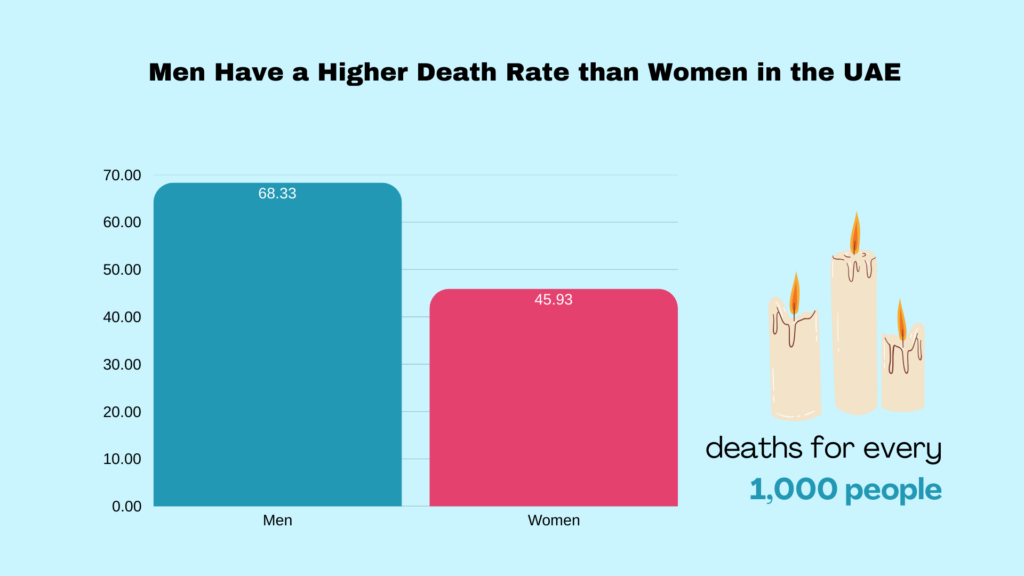
Men have a higher death rate than women. In 2022, 68.33 men died per 1,000 adult males, compared to 45.93 per 1,000 adult females.
This difference is partly due to accidents and dangerous working conditions that affect men more frequently.
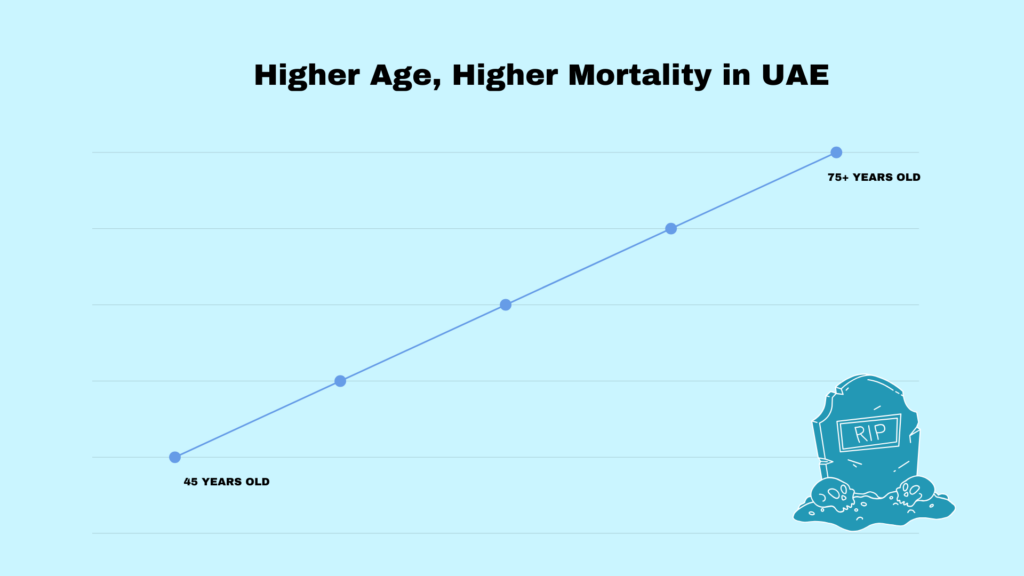
Mortality rates also rise with age, with older adults and the elderly experiencing higher rates of death. The 75+ age group consistently recorded the most deaths, reaching 1,029 in 2021. Deaths also rose significantly in the 45-49 and older age groups.
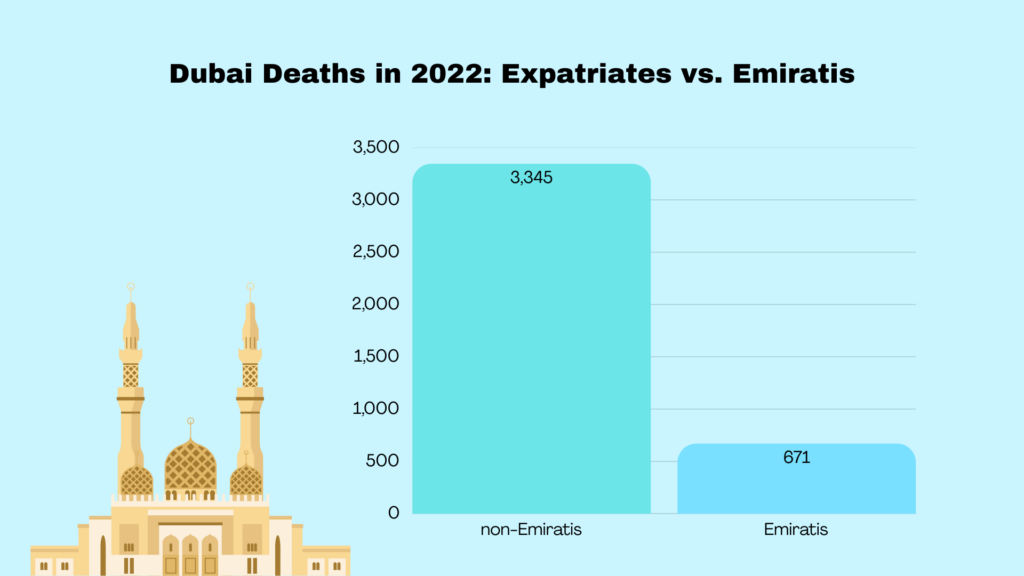
In 2022, a total of 4,016 people died in Dubai. Most of these deaths were among non-Emiratis, with 3,345 passing away, while Emiratis made up a much smaller number, with 671 deaths. This is because Dubai has a large number of expatriates who come to work and live in the city.
Leading Causes of Death in Dubai
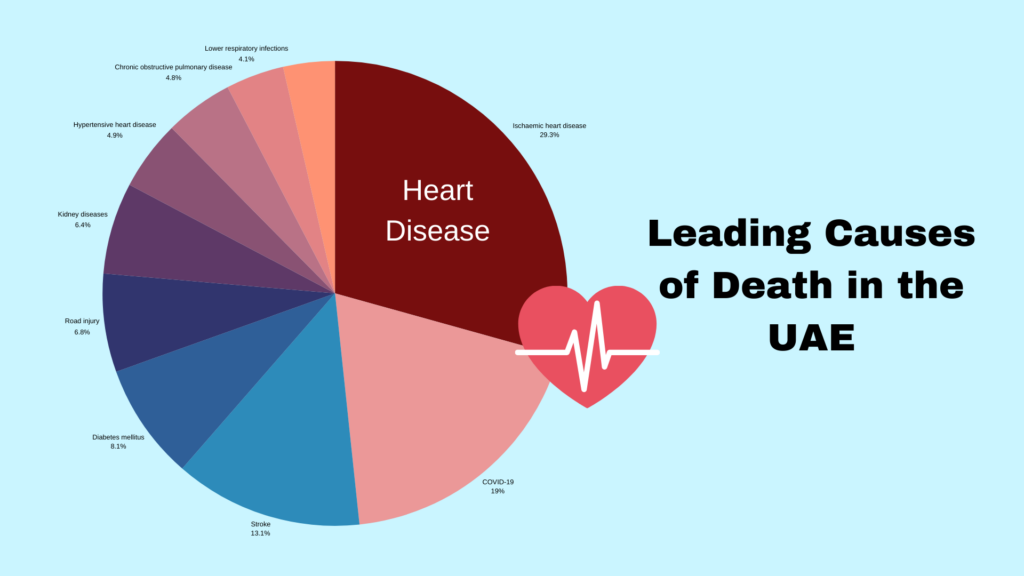
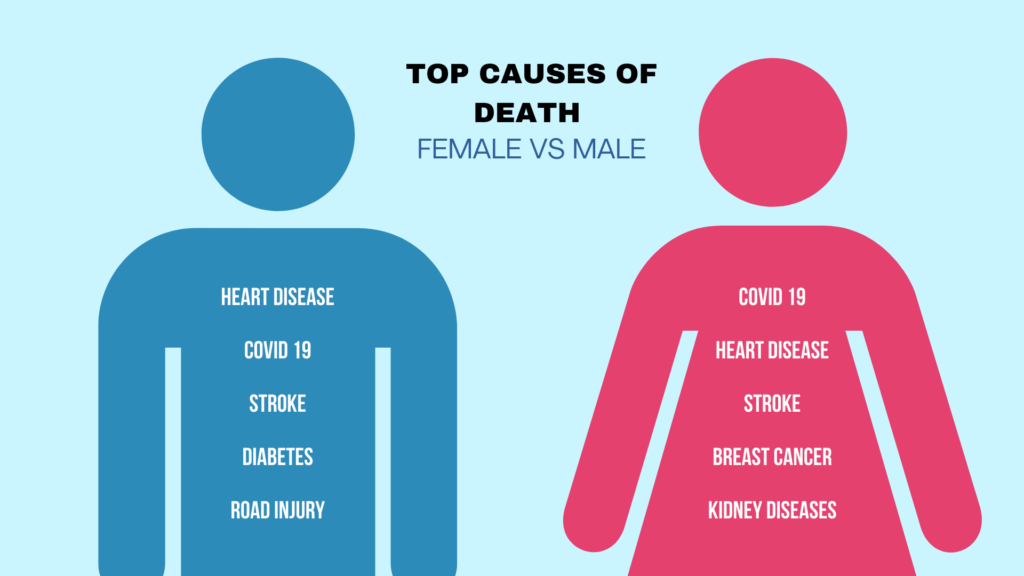
According to the WHO, in 2021, most deaths in the UAE were caused by serious, noncommunicable illnesses. Heart disease was the top cause, especially for men, followed by stroke and diabetes. COVID-19 was also a major cause of death, affecting both men and women.
Image Idea: Under the universal symbol for males and females, list the top 5 causes of death for men and women in the UAE in 2021. (Females – COVID 19, heart disease, stroke, breast cancer, kidney diseases; Male – heart disease, COVID 19, stroke, diabetes, road injury). Use the “Top Causes of Death – Female” table and the “Top Causes of Death – Male” table in the WHO Data as the reference.
Cancer, kidney disease, and lung problems were other common reasons people passed away, with breast cancer being a big concern for women.
Impact of Road Accidents on Mortality in Dubai
In 2023, Dubai’s road fatality rate dropped to a record low of 1.6 deaths per 100,000 people, marking a 93% decrease since 2007.
This could be attributed to several government initiatives, like enforcing stricter traffic laws and running awareness campaigns. For example, the Dubai Traffic Safety Strategy aimed to lower fatalities to 1.5 per 100,000 people by 2021 through improved driving habits and vehicle inspections.
Despite this progress, the UAE saw a slight 3% increase in road deaths from the previous year’s data, totaling 352 fatalities in 2023.
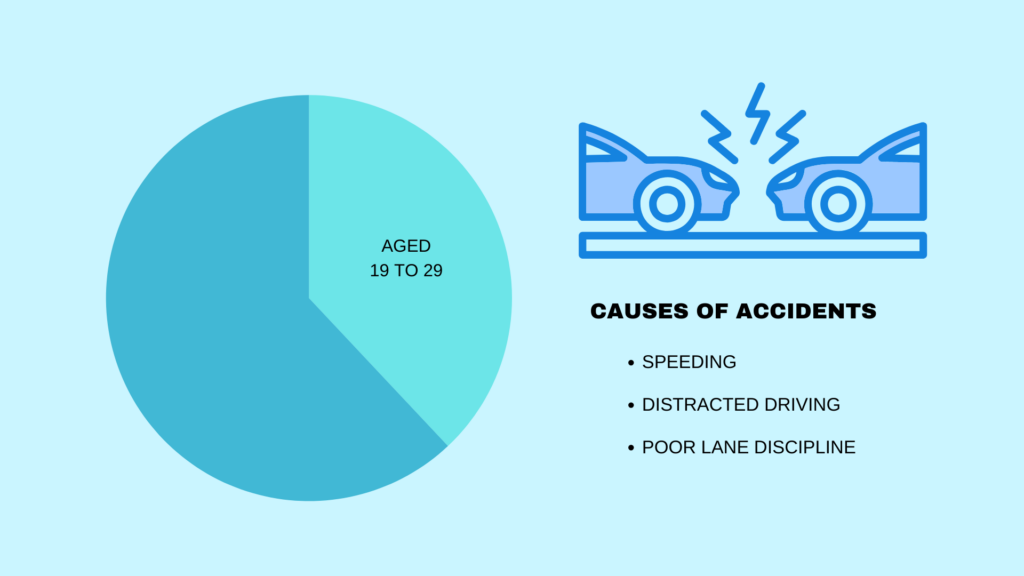
Young drivers in Dubai aged 19 to 29 were affected, accounting for 38% of these deaths. The leading causes of accidents included distracted driving, sudden lane changes, tailgating, negligence, and poor lane discipline, contributing to 70% of the fatalities.
Infant and Maternal Mortality Rates in Dubai
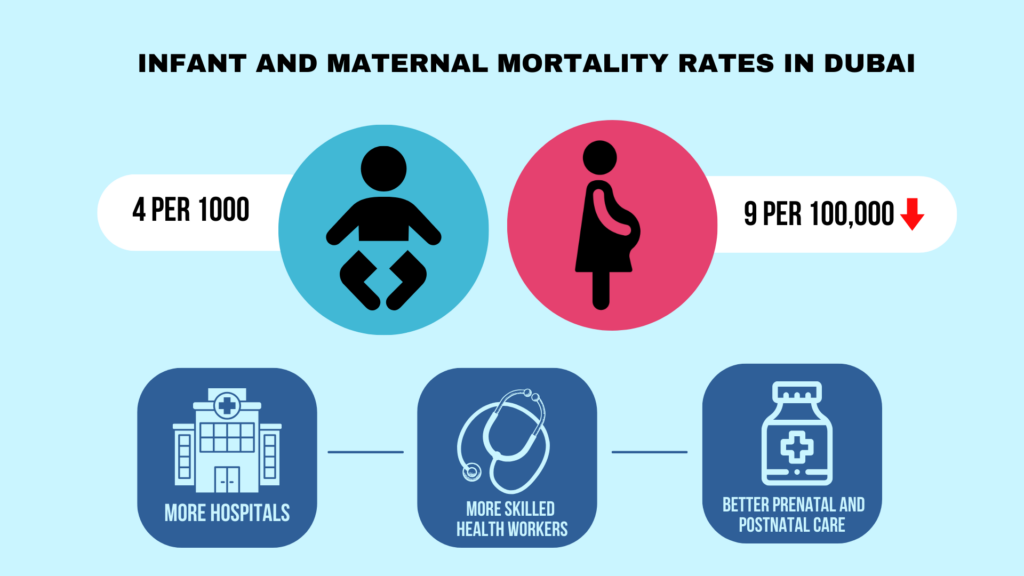
Dubai has made great progress in lowering the number of babies and mothers who die during birth. In 2022, about 4 out of every 1,000 babies died before their first birthday.
For mothers, in 2020, about 9 women died for every 100,000 births.
These improvements are due to better care before and after birth, more hospitals and clinics, and almost all births being helped by skilled health workers. However, challenges like early births and health problems during pregnancy still need attention.
Impact of Lifestyle Diseases on Mortality
According to the WHO, non-communicable diseases (NCDs) such as cardiovascular diseases, cancer, diabetes, and chronic respiratory diseases are responsible for approximately 77% of all deaths in the United Arab Emirates (UAE).
To address this major health issue, Dubai introduced the Dubai Fitness Challenge. This yearly event encourages residents to exercise for 30 minutes daily over 30 days. In 2024, the Dubai Fitness Challenge had a record 2,735,158 participants, showing the city’s strong commitment to healthier living.
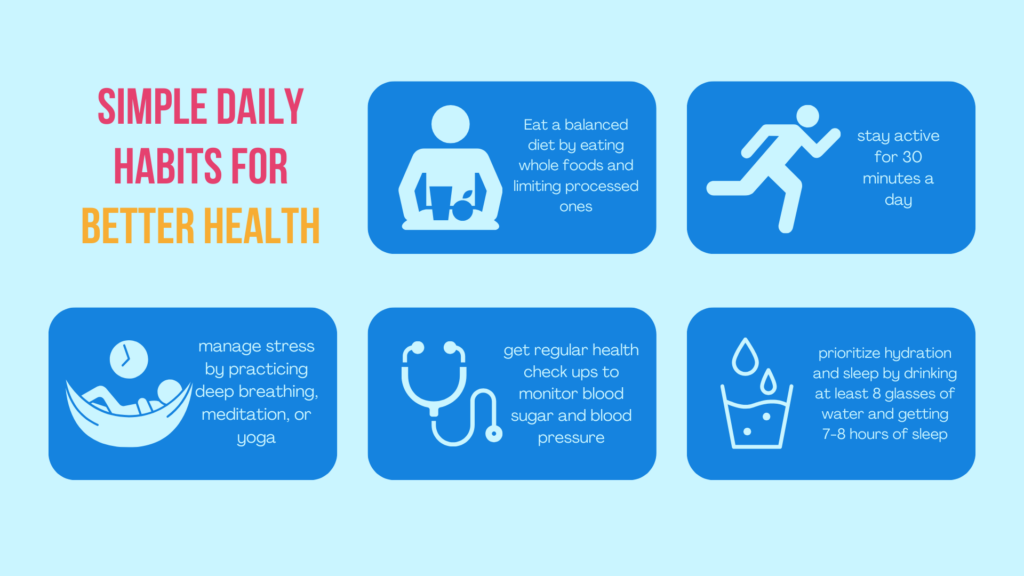
To stay healthy and avoid diseases like heart problems and diabetes, people should make simple changes in their daily lives. Eating a balanced diet with plenty of fruits, vegetables, whole grains, lean meats, and good fats is very important.
Regular exercise, such as walking fast, riding a bike, or swimming for at least 30 minutes each day, helps the body stay strong, and managing stress by using relaxation methods like deep breathing, meditation, or yoga can improve overall well-being.
It’s also important to visit the doctor regularly to check blood pressure, blood sugar, and other health markers.
Finally, drinking enough water and getting at least seven to eight hours of sleep each night helps the body rest and recover.
Seasonal and Environmental Factors Affecting Mortality
Dubai’s very hot summers, with temperatures often exceeding 50°C, make outdoor work dangerous. Workers, such as builders and delivery drivers, face risks such as heat exhaustion and heatstroke. Doctors advise these workers to drink water every 20 to 30 minutes to stay safe.
Air pollution in the UAE is also a significant health concern. Tiny particles in the air, often from human activities, can cause serious health problems. Studies estimate that outdoor air pollution leads to about 7% of all deaths in the country.
To protect workers, the UAE government has rules like banning outdoor work during the hottest part of the day in summer.
Companies are also taking steps. For example, Emirates Global Aluminium has programs to prevent heat-related illnesses, achieving zero cases for three summers in a row.
Government Efforts to Reduce Mortality in Dubai
The United Arab Emirates has put in place several programs to help people stay healthy and avoid preventable deaths.
Under the “We the UAE 2031 Vision”, the UAE encourages people to get regular health check-ups to find diseases like diabetes and cancer early.
To reduce car accidents, the UAE has started campaigns like “Accident-Free Day.” This program asks drivers to follow traffic rules, especially at the beginning of the school year, to keep everyone safe.
The government is also building more hospitals and clinics, especially in areas that need them most. This ensures everyone can get medical care when they need it.
Finally, the UAE has rules to protect workers from dangers like extreme heat and industrial accidents. These rules help keep workers safe and healthy on the job.
Future Trends and Challenges in Mortality
Dubai’s healthcare system is changing fast due to population growth, aging, and new technology.
The number of older adults in the UAE is growing. By 2050, about 16% of the population will be over 60, compared to just 1% in 2016. Older people are more likely to suffer from diseases like heart problems and diabetes, which could lead to more deaths from these illnesses.
Dubai’s population is also increasing quickly, reaching over 10 million in 2022. More people mean a higher demand for doctors, hospitals, and healthcare services. While Dubai is expanding its healthcare system, it still faces challenges like a shortage of doctors, many of whom are foreign workers who might leave.
Dubai is also using artificial intelligence (AI) and telemedicine to make healthcare better. AI helps doctors detect diseases early, while telemedicine allows people to get medical advice without visiting a hospital. Wearable devices like smartwatches also help monitor health, allowing for quicker treatments.
References:
- 3. Good health and well-being | The Official Portal of the UAE Government. (n.d.). https://u.ae/en/about-the-uae/leaving-no-one-behind/3goodhealthandwellbeing
- Accident deaths in Dubai down 93% as RTA, police make roads safer. (2024, July 10). Gulf News. https://gulfnews.com/uae/transport/accident-deaths-in-dubai-down-93-as-rta-police-make-roads-safer-1.103464894
- Ahmed, A. A. (2025, January 6). Dubai: Young drivers cause majority of road deaths, say authorities. Khaleej Times. https://www.khaleejtimes.com/uae/dubai-young-drivers-cause-majority-of-road-deaths-say-authorities
- Alshamsi, A. I. (2024a). A review of the United Arab Emirates healthcare systems on medical tourism and accreditation. Frontiers in Health Services, 4. https://doi.org/10.3389/frhs.2024.1329252
- Aziz, S. (2024, October 23). EGA achieves zero heat-related illnesses for the third consecutive summer. https://technicalreviewmiddleeast.com/manufacturing/ega-achieves-zero-heat-related-illnesses-for-the-third-consecutive-summer
- Deaths and medical visits attributable to environmental pollution in the United Arab Emirates. (n.d.). National Library of Medicine. https://pubmed.ncbi.nlm.nih.gov/23469200/
- Deaths by Age Groups – Emirate of Dubai. (n.d.). In Dubai Statistics Center. https://www.dsc.gov.ae/Report/DSC_SYB_2022_01_12.pdf
- Deaths by Nationality, Gender and Age Groups – Emirate of Dubai. (n.d.). In Dubai Statistics Center. https://www.dsc.gov.ae/Report/DSC_SYB_2022_01_11.pdf
- Dubai 30X30 | Dubai Fitness Challenge. (n.d.). Dubai Fitness Challenge. https://www.dubaifitnesschallenge.com/en/
- Facts and figures: UAE population by nationality, and more. (n.d.). https://www.mofa.gov.ae/en/the-uae/facts-and-figures
- Health and safety at workplace | The Official Portal of the UAE Government. (n.d.). https://u.ae/en/information-and-services/jobs/health-and-safety-at-workplace
- Healthy Living with Diabetes. (2024, December 28). National Institute of Diabetes and Digestive and Kidney Diseases. https://www.niddk.nih.gov/health-information/diabetes/overview/healthy-living-with-diabetes
- MACROTRENDS. (2025, January 31). World Death Rate 1950-2025. https://macrotrends.net/global-metrics/countries/WLD/world/death-rate
- Mid-day break during summer. (n.d.). United Arab Emirates’ Government Portal. https://u.ae/en/information-and-services/jobs/health-and-safety-at-workplace/mid-day-break-rule-for-workers-under-the-sun
- Ministry of Interior. (n.d.). MOI Rolls Out “Accident-Free Day” Campaign Ahead o . . . MOI Rolls Out “Accident-Free Day” Campaign Ahead O . . . https://moi.gov.ae/en/media.center/news/081324n01.aspx
- Ramahi, N. A. (2021, July 6). Outdoor workers must drink water at least every 20 to 30 minutes, doctors say. The National. https://www.thenationalnews.com/uae/health/outdoor-workers-must-drink-water-at-least-every-20-to-30-minutes-doctors-say-1.618343
- Statista. (2022, September 12). Crude mortality rate per thousand inhabitants in Dubai 2016-2019. https://www.statista.com/statistics/1100589/dubai-crude-mortality-rate-per-thousand-inhabitants/
- Statista. (2024, November 4). Death rate in the United Arab Emirates 2012-2022. https://www.statista.com/statistics/581099/death-rate-in-united-arab-emirates/
- Top strategies to prevent heart disease. (n.d.). Mayo Clinic. https://www.mayoclinic.org/diseases-conditions/heart-disease/in-depth/heart-disease-prevention/art-20046502
- UAE road accidents, injuries on the rise, but deaths near all-time low: Report. (n.d.). Alarabiya News. https://english.alarabiya.net/News/gulf/2024/05/03/uae-road-accidents-injuries-on-the-rise-but-deaths-near-all-time-low-report
- UAE: share of deaths by major cause 2019 | Statista. (2024, February 13). Statista. https://www.statista.com/statistics/672404/uae-share-of-deaths-by-major-cause/
- United Arab Emirates. (n.d.-a). Datadot. https://data.who.int/countries/784
- United Arab Emirates. (n.d.-b). Unicef. https://data.unicef.org/country/are/
- UNITED ARAB EMIRATES. (n.d.). In World Health Organization. https://cdn.who.int/media/docs/default-source/country-profiles/ncds/are_en.pdf
- United Arab Emirates Maternal mortality – data, chart | TheGlobalEconomy.com. (n.d.). TheGlobalEconomy.com. https://www.theglobaleconomy.com/United-Arab-Emirates/maternal_mortality
- EY. (n.d.). Five future trends and insights that are shaping UAE health care ecosystem. https://www.ey.com/en_bh/industries/health/five-future-trends-and-insights-that-are-shaping-uae-health-care-ecosystem